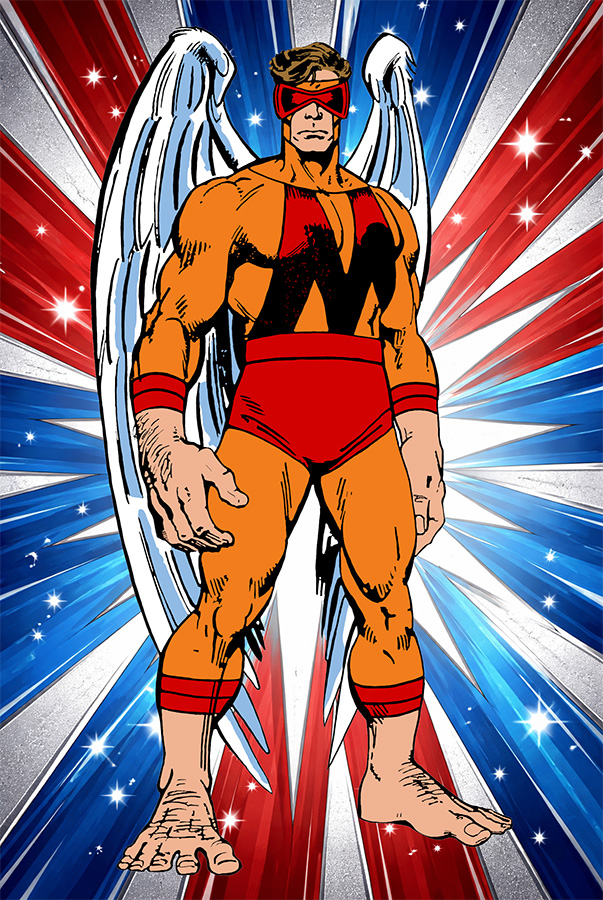
- Known Aliases: None
- Identity: Publicly known
- Occupation: Adventurer
- Legal Status: Citizen of the United States with no criminal record
- Place of Birth: Passaic, New Jersey
- Marital Status: Single
- Known Relatives: Ronald (father, deceased)
- Group Affiliation: Formerly X-Men, Dark X-Men, Brotherhood of Mutants, Excalibur
- Base of Operation: Krakoa, Pacific Ocean
- Education: College gradute
- Species: Human (Mutant)
- Gender: Male
- Height: 6 ft. 2 in.
- Weight: 225 lbs
- Eyes: Brown
- Hair: Brown
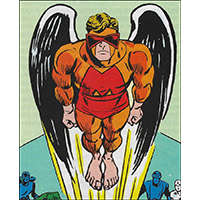
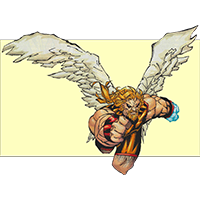
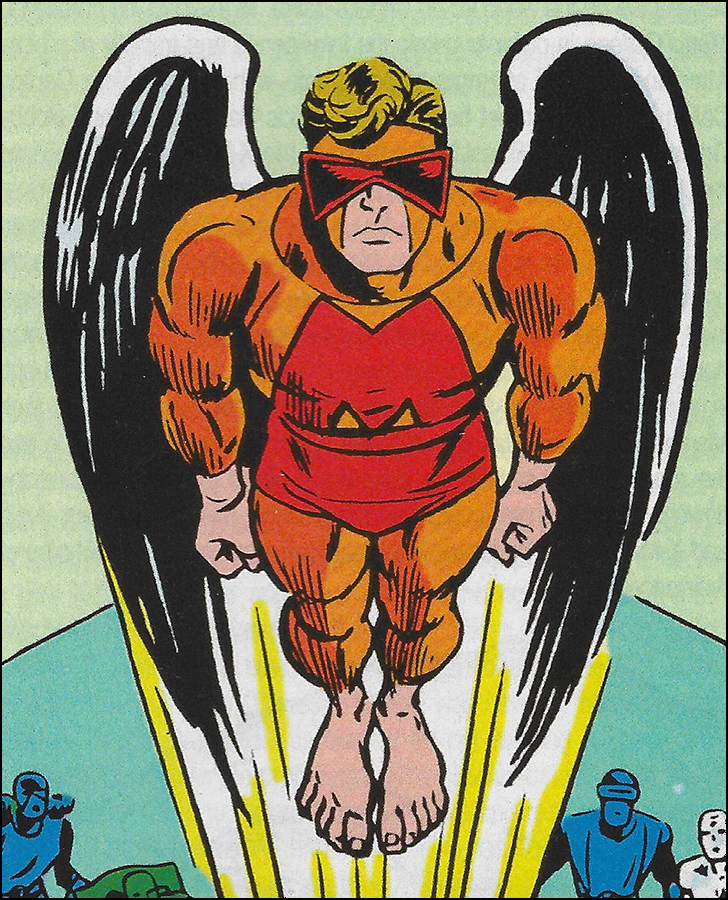
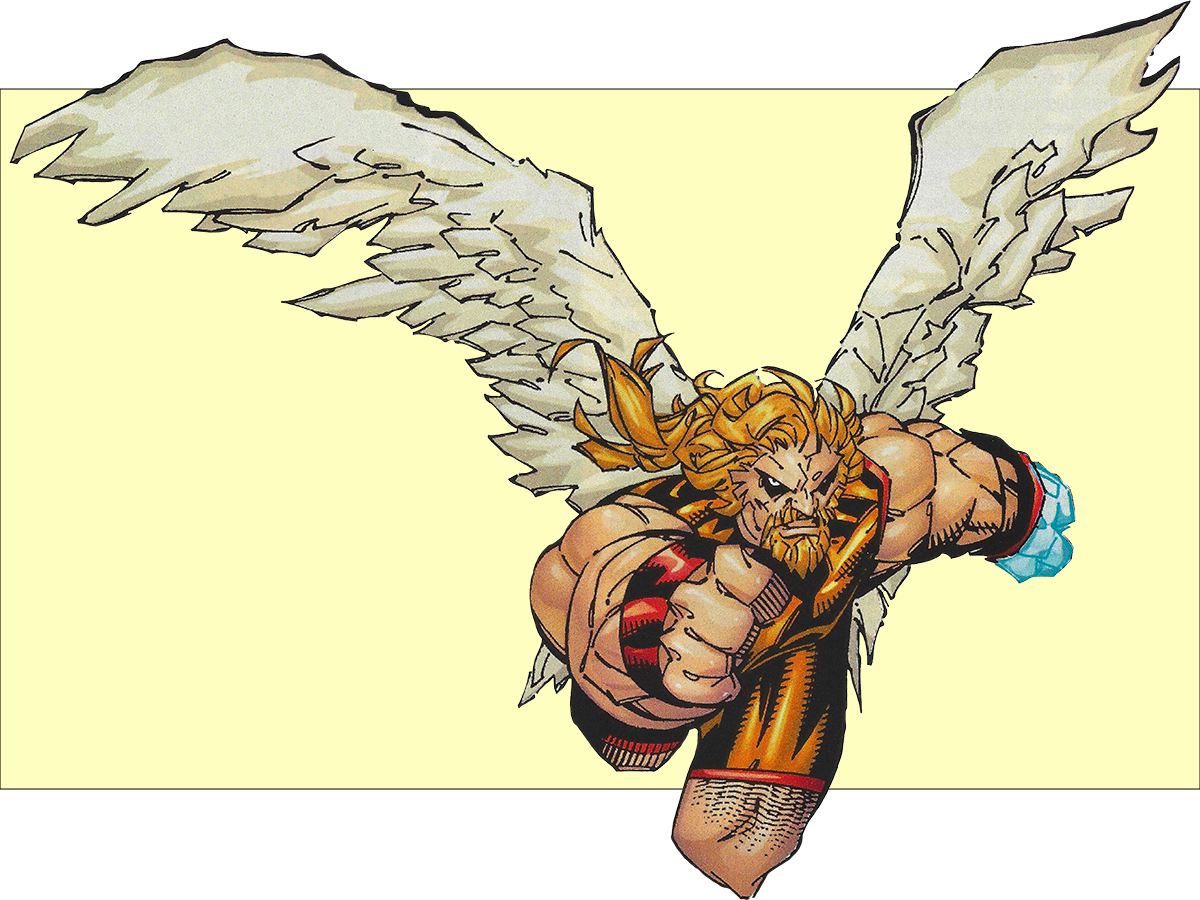
- Other Distinguishing Features: He gains features based on the powers he is mimicking, such as Angel's feathered wings and Beast's enlarged hands and feet.
Calvin Rankin’s life began in the shadow of brilliance and obsession. His father, Ronald Rankin, was a gifted but increasingly unstable researcher fascinated with the hidden genetic potential of humanity. Convinced that evolution could be accelerated artificially, Ronald conducted risky experiments that pushed far beyond accepted science. During one such experiment, an accident exposed young Calvin to exotic radiation generated by one of his father’s devices. The incident permanently altered Calvin’s physiology, though the full extent of the transformation did not reveal itself immediately.
In the aftermath of the accident, Ronald Rankin realized his son had changed. Calvin’s body had become a living receptor capable of duplicating the abilities, talents, and even knowledge of those around him. Terrified of what others might do if they discovered this, Ronald fled with his son and hid in isolation while attempting to construct a machine that could remove the powers. The situation ended in tragedy when local villagers discovered them and a violent confrontation triggered a cave-in that killed Ronald. Calvin survived, but he was left alone in the world and burdened with powers he barely understood.
Expand full history
Years later, while attending college, Calvin encountered two students who seemed strangely gifted: Hank McCoy and Bobby Drake. Unbeknownst to them, their proximity awakened Calvin’s dormant mutation. Suddenly he found himself capable of extraordinary feats. Investigating further, he followed them and soon discovered their association with the young mutant heroes known as the X-Men. When Calvin approached them, his ability surged dramatically. Standing near the team allowed him to manifest multiple powers simultaneously: the optic blasts of Cyclops, the telekinesis of Jean Grey, the strength and agility of Beast, the cryokinesis of Iceman, and the winged flight of Angel.
Realizing the incredible potential of these abilities, Calvin adopted the name Mimic. At first, however, he was driven more by ego than heroism. Believing himself superior to the young heroes whose powers he could duplicate, he attempted to force his way into the X-Men and even captured Jean Grey while seeking to use his father’s machine to make the borrowed powers permanent. The plan failed disastrously. The machine instead stripped him of his powers entirely, and Professor X erased Calvin’s memories of the X-Men to prevent further conflict.
For a time Calvin lived an ordinary life, unaware of the extraordinary abilities he had once possessed. But fate was not finished with him. His powers eventually returned, along with his memories, and he once again encountered the X-Men. This time the circumstances were different. Calvin joined the team as a genuine member, and his immense power even led to him being named deputy leader under Cyclops. During this period Mimic was one of the most formidable mutants on Earth, able to combine the powers of several X-Men simultaneously. Yet the same arrogance that had defined his earlier behavior resurfaced. Calvin’s pride and constant challenges to Cyclops’s authority created friction within the team, and eventually he was expelled.
His life afterward became increasingly turbulent. Mimic’s powers evolved in unusual ways. Although he could still copy abilities from those nearby, he permanently retained the powers of the original five X-Men—Angel’s wings, Beast’s enhanced physiology, Cyclops’s optic blasts, Iceman’s cryokinesis, and Jean Grey’s telekinesis. At times he could also absorb memories, skills, and even personalities from others. But this power came with instability. In one incident his mutation began draining life-force from people around him, a dangerous development that foreshadowed future tragedy.
That tragedy came during a confrontation involving the monstrous Hulk. Mimic absorbed enormous levels of radiation during the conflict. The overload proved fatal, and Calvin Rankin died from radiation poisoning. For a time, it seemed his story had ended.
Yet in the strange world of mutants, death is rarely permanent. Mimic eventually returned to life under mysterious circumstances after acquiring the healing factor of Wolverine. The experience left him psychologically disoriented; for a period, he even believed he was Wolverine himself. Only after confronting the truth of his identity did Calvin regain a sense of stability.
Throughout the years that followed, Mimic drifted between alliances and conflicts. His unstable personality and immense power made him a target for manipulation. At one point he became entangled with the psionic entity Onslaught, who temporarily amplified his abilities. He also associated with the Brotherhood of Mutants, further blurring the line between hero and villain in his life. During periods of psychological crisis he came under the care of geneticist Moira MacTaggert, who diagnosed him with bipolar disorder and attempted to help him regain emotional balance.
One of the most controversial chapters of Calvin Rankin’s life occurred during the era when Norman Osborn seized control of much of the world’s security apparatus. Osborn formed his own government-sponsored mutant strike team, the Dark X-Men, to oppose the independent mutant community led by Cyclops. Mimic served as a member of this team, placing him once again in opposition to the very heroes he had once fought beside.
Despite these betrayals and reversals, Calvin Rankin was never purely a villain. His life was defined by instability—emotional, psychological, and biological. His mutation made him a reflection of others, constantly borrowing their strengths and sometimes their weaknesses. Unlike many mutants whose powers defined a clear identity, Mimic lived with the unsettling knowledge that his abilities were literally shaped by those around him.
Over the years he sometimes acted as a hero, sometimes as an antagonist, and sometimes as a lost man searching for direction. Yet through every rise and fall, one truth remained constant: Calvin Rankin was a living mirror of the mutant world itself. Surrounded by heroes he could become one of the most powerful champions on Earth. Surrounded by conflict and manipulation he could become something far darker.
Calvin Rankin, known as Mimic, possesses one of the most unusual mutant physiologies in the history of Earth-616. His mutation allows him to duplicate the powers, physical traits, talents, knowledge, and even certain aspects of the mental patterns of other beings within range. Unlike many power-copying mutants, Mimic does not merely imitate a single ability at a time; his body functions as a biological amplifier and storage system capable of replicating multiple powers simultaneously. This capacity has made him, at various points in his life, one of the most versatile and potentially dangerous mutants on Earth.
Mimic’s primary ability is power duplication through proximity. When he is near another superhuman, particularly mutants, his body automatically analyzes and replicates their abilities. The process is largely passive and requires no conscious effort, though experience has given him some degree of control. Once copied, the powers function as if they were his own, complete with instinctive understanding of how to use them. In many cases he also duplicates the subject’s knowledge and skill sets, meaning that he can temporarily gain mastery of techniques he never studied. For example, if he duplicates the abilities of a trained fighter or pilot, he often acquires the muscle memory and technical knowledge associated with those talents. This ability extends beyond mutants to certain other enhanced individuals, though it tends to work most effectively with mutant powers due to their genetic basis.
Expand full description
Early in his career, Mimic’s duplication ability was temporary and depended entirely on proximity. If the original source moved too far away, the copied powers would gradually fade. However, after extended exposure to the original members of the X-Men, Mimic permanently retained many of their powers. These became part of his baseline physiology and are typically present even when he is not near their original owners. Among these permanent abilities are the optic blasts of Cyclops, which allow Mimic to emit powerful concussive energy beams from his eyes. Unlike Cyclops, who relies on a visor to regulate the blasts, Mimic has demonstrated varying levels of control depending on his current power state. These blasts are capable of delivering tremendous kinetic force and can propel objects or devastate obstacles.
He also permanently possesses the cryokinetic abilities of Iceman. Through this power he can lower temperatures in his immediate environment, generate ice, freeze moisture in the air, and encase objects or opponents in solid ice. While Mimic’s control has sometimes been less refined than Iceman’s, he has nonetheless demonstrated the capacity to create ice structures, freeze surfaces, and manipulate cold offensively or defensively.
From Jean Grey he permanently acquired telekinetic abilities. This allows him to move objects with his mind, generate telekinetic force, and manipulate matter without physical contact. Although Jean Grey’s telepathy is a defining element of her power set, Mimic’s duplication historically emphasized telekinesis more consistently than telepathy, though he has occasionally demonstrated limited telepathic awareness depending on the circumstances of his power absorption.
Mimic also permanently retains the enhanced physiology of Beast. This includes superhuman strength, agility, balance, coordination, and reflexes. His musculature and skeletal structure are capable of supporting feats far beyond normal human capability, including powerful leaps, acrobatic maneuvers, and significant lifting strength. These physical attributes make him formidable even without relying on other powers.
From Angel, Mimic gained large feathered wings that allow sustained flight. His wings provide both aerial mobility and enhanced maneuverability, enabling him to travel quickly and fight effectively in three dimensions. The wings also possess enough strength to generate powerful gusts or shield his body during combat.
Beyond these permanent abilities, Mimic retains his original mutant trait: the capacity to copy additional powers from individuals nearby. When surrounded by other superhumans, his capabilities can expand dramatically. He may temporarily acquire strength, energy projection, durability, regeneration, or other exotic abilities depending on the powers of those present. In some cases he has been able to replicate several different power sets simultaneously, combining them into a single fighting style that adapts to the situation.
His duplication also extends to mental attributes. When copying abilities from powerful individuals, Mimic can absorb fragments of their memories, knowledge, or instinctive skills. This has allowed him to use complex technologies, perform advanced combat maneuvers, or understand unfamiliar languages and scientific concepts without formal training. However, this aspect of his mutation can also create psychological strain. Absorbing too many mental patterns at once has occasionally led to confusion, identity disturbances, or emotional instability.
Another unusual characteristic of Mimic’s mutation is its capacity to copy physiological adaptations rather than purely external powers. At various times he has replicated healing factors, sensory enhancements, or specialized biological traits. For example, when exposed to the mutant Wolverine, Mimic temporarily acquired a regenerative healing factor that dramatically accelerated his recovery from injury. This same interaction was partly responsible for his resurrection after his death from radiation poisoning.
Mimic’s power levels can fluctuate significantly depending on the number and strength of individuals around him. When isolated from other superhumans he still retains his permanent X-Men abilities, making him a formidable mutant in his own right. However, when surrounded by powerful mutants his capabilities can multiply dramatically, allowing him to wield combinations of powers that few individuals could match. In team environments this makes him particularly dangerous, as he can function as a living composite of multiple allies.
Despite these advantages, his mutation carries several weaknesses and limitations. His powers are highly dependent on proximity for duplication, meaning that distance from other superhumans can reduce his versatility. Maintaining multiple power sets simultaneously can also place significant strain on his physiology and nervous system. Overloading his body with too many abilities has occasionally caused physical exhaustion or loss of control.
Another complication is that Mimic does not always duplicate powers at their full strength. In many cases he manifests only a fraction of the original individual’s power level. The exact percentage has varied throughout his history, but it is often described as roughly half of the original power’s intensity, though certain conditions or external enhancements have temporarily increased that ratio.
Mimic’s mutation has also displayed unpredictable side effects. At one point his powers began draining life-force from nearby individuals, suggesting that his ability to copy energy and biological traits could unintentionally harm others. Exposure to extreme radiation during a confrontation involving Hulk overwhelmed his system and resulted in fatal radiation poisoning. This incident demonstrated that while Mimic can absorb and replicate extraordinary energies, his body still has limits.
On rare occasions external forces have amplified his mutation beyond its natural parameters. The psionic entity Onslaught temporarily enhanced Mimic’s abilities, allowing him to access greater power levels and copy abilities more efficiently. Such enhancements illustrate the latent potential within his genetic structure, suggesting that under the right circumstances his mutation could rival or surpass many other power-mimicking mutants.
In combat situations Mimic is most effective when operating alongside other superpowered allies. His ability to replicate multiple powers allows him to adapt rapidly to new threats, switching tactics as he absorbs different abilities. With flight, superhuman agility, optic blasts, cryokinesis, telekinesis, and additional borrowed powers all available simultaneously, he can function as a versatile aerial combatant, energy projector, and telekinetic controller of the battlefield.
Ultimately, Mimic’s powers represent a living reflection of the people around him. His mutation does not simply grant him strength; it turns him into a biological mirror capable of reproducing the extraordinary gifts of others. This makes him one of the most adaptable mutants in existence, but it also means his identity is constantly influenced by the abilities and personalities he absorbs. In a world filled with powerful beings, Calvin Rankin stands as a unique figure—an individual whose greatest power is the ability to become a composite of the very heroes and rivals who surround him.
Unlike many superheroes and villains who rely on specialized equipment, Calvin Rankin—Mimic—has rarely depended on conventional weapons. His mutation already grants him a versatile arsenal of abilities copied from others, making technological tools largely unnecessary. Nevertheless, several devices and pieces of paraphernalia have played important roles in his life, particularly during key moments when he sought to control or enhance his powers.
One of the most significant pieces of technology associated with Mimic was a power-altering machine originally designed by his father, Ronald Rankin. Ronald Rankin constructed the device in an attempt to remove or stabilize Calvin’s mutation after the laboratory accident that gave him his abilities. The machine was designed to manipulate genetic and energy patterns associated with mutant powers, theoretically allowing Calvin to either suppress his mutation or convert temporary copied abilities into permanent ones. When Calvin later rediscovered the device, he attempted to use it to permanently retain the abilities of the original X-Men. Instead, the machine malfunctioned, stripping him of his powers entirely. This event marked one of the earliest demonstrations that Mimic’s mutation was unstable when subjected to artificial modification. Although the device itself was eventually lost or destroyed, its legacy remained important in shaping Calvin’s early life and his complicated relationship with his powers.
Expand full description
Because Mimic permanently retained the optic blasts of Cyclops, he has occasionally used protective eyewear or visor-type equipment to help regulate or safely direct those blasts. Unlike Cyclops—whose mutation prevents him from naturally controlling his optic energy—Mimic has shown varying degrees of voluntary control over the power. However, during periods when his abilities were unstable or newly copied, protective lenses or improvised visors were sometimes used to prevent accidental discharges. These devices functioned similarly to Cyclops’s ruby-quartz visor, which safely channels the concussive energy emitted from the eyes.
During his time working with various teams or organizations, Mimic also made use of standard superhero equipment such as communication devices, protective uniforms, and flight-compatible costumes. When he served alongside the X-Men or other mutant groups, he typically wore uniforms designed to accommodate the large feathered wings he permanently copied from Angel. These suits were constructed from durable materials capable of withstanding high-velocity flight, energy discharges, and exposure to extreme cold generated by the cryokinetic abilities he copied from Iceman. Although these uniforms did not provide offensive capabilities, they functioned as practical paraphernalia that allowed him to operate safely in combat environments.
Later in his career, when he served on the government-sponsored Dark X-Men under the authority of Norman Osborn, Mimic utilized standard tactical equipment issued to that team. This included secure communication systems, identification gear, and specialized uniforms designed to present the group as a sanctioned successor to the traditional X-Men. These items were less about enhancing his powers and more about reinforcing the team’s public image and operational coordination.
On rare occasions, Mimic has also interacted with technological systems designed to amplify or analyze mutant powers. Because his mutation can copy abilities from others, he has sometimes served as a living test subject for devices meant to measure power levels or study mutant energy signatures. Scientists such as Moira MacTaggert have examined his physiology to better understand how his body duplicates powers from nearby individuals. In these contexts he occasionally used monitoring equipment or containment apparatus designed to track fluctuations in his abilities, particularly during periods when his mutation produced dangerous side effects such as involuntary energy absorption or life-force drainage.
Overall, Mimic’s reliance on weapons or equipment has always been minimal compared to other superhumans. His mutation effectively provides him with a constantly shifting arsenal of abilities drawn from those around him. As a result, the few pieces of paraphernalia associated with him—his father’s experimental machine, protective visors, specialized costumes, and organizational gear—serve mainly as tools for managing or contextualizing his powers rather than replacing them. In essence, Mimic himself is the weapon. His body functions as a living composite of the powers he absorbs, making external armaments largely unnecessary in most situations.
- First appearance (Unrevealed flashback origin later shown in X-Men #27, 1967)
- First full appearance as Mimic (X-Men Vol. 1 #19, 1966)
- Attempts to join the X-Men and kidnaps Jean Grey (X-Men Vol. 1 #19–20, 1966)
- Uses his father’s power machine; loses his powers and has his memory erased by Professor X (X-Men Vol. 1 #27, 1967)
- Regains powers and memories (X-Men Vol. 1 #49, 1968)
- Joins the X-Men as a member and briefly becomes deputy leader (X-Men Vol. 1 #49–52, 1968)
- Expelled from the X-Men due to arrogance and conflict with Cyclops (X-Men Vol. 1 #52, 1968)
- Powers begin dangerously draining life energy from others (Incredible Hulk Vol. 1 #161, 1973)
- Dies of radiation poisoning after absorbing gamma radiation from Hulk (Incredible Hulk Vol. 1 #161, 1973)
- Resurrected after absorbing the healing factor of Wolverine; temporarily believes he is Wolverine (Referenced in Exiles #80, 2006)
- Diagnosed with bipolar disorder and treated by Moira MacTaggert (X-Men Unlimited #3, 1993)
- Recruited and empowered by Onslaught (X-Man #52–54, 1999)
- Associated with the Brotherhood of Mutants (X-Man #52–54, 1999)
- Captured and experimented on by anti-mutant forces (X-Man #52–54, 1999)
- Joins Norman Osborn’s government-sponsored Dark X-Men (Dark X-Men #1–5, 2010)
- Participates in attacks on Cyclops’s mutant stronghold Utopia during the Dark Reign conflict (Dark X-Men #1–5, 2010)
- After Osborn’s fall, Mimic disappears from the Dark X-Men roster and returns to obscurity (Referenced following Siege, 2010)
- Profile and history revisited in official handbook material (Official Handbook of the Marvel Universe A‑Z #7, 2010)
- Mentioned among notable power-copying mutants during broader mutant historical retrospectives in later Marvel reference publications (2010s)
- Referenced in discussions of early X-Men members and allies during mutant historical records connected to the Krakoan era beginning with House of X #1, 2019
Expand full list