Spider-Man
Peter Benjamin Parker
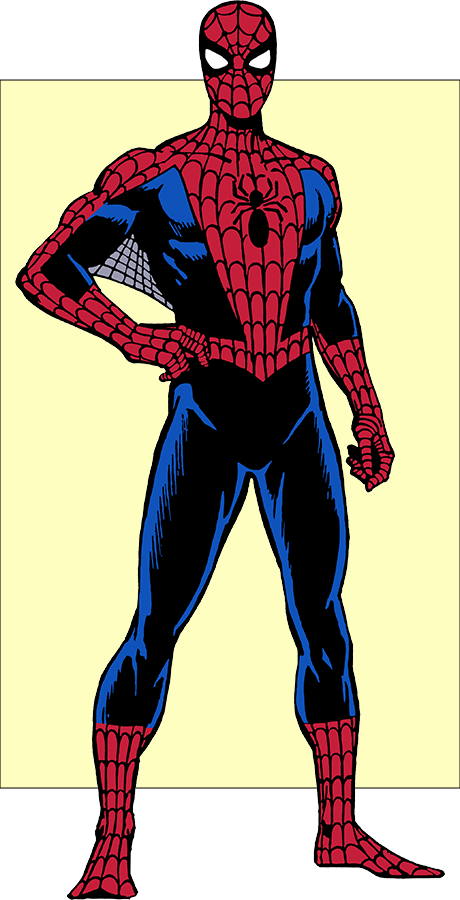
- Known Aliases: None
- Identity: Secret
- Occupation: Freelance photographer, adventurer
- Identity: Secret
- Legal Status: Citizen of the United States with no criminal record
- Place of Birth: Forest Hills, New York
- Marital Status: Married
- Known Relatives: Richard Parker (father, deceased), Mary Parker (mother, deceased), Benjamin Parker (uncle, deceased), May Parker (aunt), Mary Jane Watson-Parker (wife)
- Group Affiliation: None
- Base of Operations: New York City
- Education: BS in Physics, doctoral studies in Biochemistry at ESU (Empire State University) (incomplete)
- Species: Human (Mutate)
- Gender: Male
- Height: 5 ft. 10 in.
- Weight: 167 lbs.
- Eyes: Hazel
- Hair: Brown
Spider-Man was born Peter Benjamin Parker in Queens, New York. His parents, Richard Parker and Mary Parker, were secretly intelligence agents whose work eventually led to their deaths while Peter was still very young. Orphaned, Peter was taken in by his kindly aunt and uncle, May Parker and Ben Parker, who raised him in their modest home in Queens. Peter grew into an intelligent but socially awkward teenager with a strong aptitude for science, often more comfortable in laboratories than among his classmates.
Peter’s life changed forever when he attended a scientific exhibition and was bitten by a spider that had been irradiated during an experiment. The bite altered his body’s chemistry, granting him superhuman strength, agility, reflexes, and the ability to cling to solid surfaces. He also developed an instinctive danger warning that later became known as his spider-sense. Realizing the potential of these new abilities, Peter designed a colorful costume and invented mechanical web-shooters that fired a powerful synthetic adhesive he created himself.
Expand full history
At first Peter used his powers selfishly, becoming a masked television performer and local celebrity. During this time he allowed a fleeing burglar to escape rather than stopping him, believing it was not his responsibility. Soon afterward that same criminal broke into the Parker home and murdered Uncle Ben during a robbery. Horrified to discover that his own indifference had allowed the tragedy to occur, Peter captured the killer and resolved to dedicate his life to preventing similar tragedies. From that moment on he lived by the principle that with great power must also come great responsibility.
As the hero Spider-Man, Peter began patrolling New York City while struggling to maintain his normal life. Financial pressures forced him to work as a freelance photographer for the newspaper run by J. Jonah Jameson, who ironically built his career denouncing Spider-Man as a public menace. While balancing school, work, and heroics, Spider-Man soon encountered a growing number of dangerous adversaries. Among the earliest were the brilliant but unstable scientist Doctor Octopus, the electrically empowered criminal Electro, the master illusionist Mysterio, and the relentless hunter Kraven the Hunter.
Spider-Man’s most personal enemy emerged in the form of the Green Goblin, secretly the wealthy industrialist Norman Osborn. The Goblin became obsessed with destroying Spider-Man’s life and eventually discovered Peter’s secret identity. Their feud reached its most tragic moment when Osborn murdered Peter’s girlfriend Gwen Stacy during a battle on the George Washington Bridge. The trauma of Gwen’s death haunted Peter for years and reinforced the emotional cost of his life as a superhero.
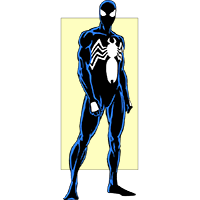
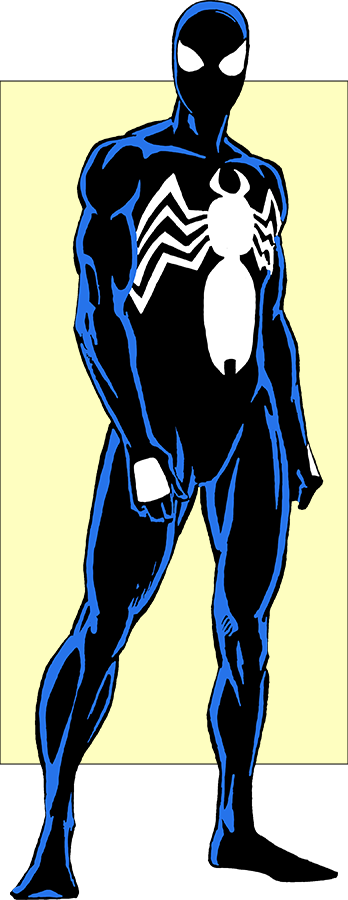
Despite this loss, Peter eventually found support in his longtime friend Mary Jane Watson. Though initially unaware of his secret identity, Mary Jane eventually learned the truth and chose to remain by Peter’s side. Over time their relationship deepened, and the two eventually married. Throughout these years Spider-Man’s adventures expanded far beyond street-level crime. During a massive interplanetary conflict he briefly obtained a living alien costume that enhanced his abilities. The creature was later revealed to be a parasitic symbiote that eventually bonded with another host and became the powerful villain Venom.
Peter’s life grew even more complicated when a clone created by one of his enemies resurfaced. This duplicate, known as Ben Reilly, temporarily replaced Peter as Spider-Man during a turbulent period in Peter’s life. Although the situation was eventually resolved, the experience forced Peter to question his own identity and place in the world.
Over time Spider-Man’s reputation evolved from that of a controversial vigilante to that of a respected hero. He fought alongside many of Earth’s greatest champions and eventually became a member of the Avengers. During a major conflict among the world’s superheroes over government regulation, Peter publicly revealed his identity in support of registration laws. However, the decision had devastating consequences when his enemies targeted his loved ones. In a desperate attempt to save Aunt May after she was gravely wounded, Peter entered into a supernatural agreement with the demon Mephisto. The bargain altered reality itself, erasing Peter’s marriage to Mary Jane from history and restoring the secrecy of his identity.
Years later Peter’s life was nearly destroyed when Doctor Octopus managed to transfer his consciousness into Peter’s body, leaving Peter trapped in Octavius’s dying form. Octavius continued operating as Spider-Man, believing himself intellectually superior to Peter and determined to prove he could be a better hero. Ultimately Peter’s will and memories endured, allowing him to reclaim control of his body and restore the true Spider-Man.
After returning, Peter briefly experienced unprecedented success. Using technology developed during the period when Octavius controlled his body, he founded the multinational company Parker Industries and operated as a globe-trotting superhero. However, the enterprise eventually collapsed due to sabotage orchestrated by Norman Osborn, forcing Peter to abandon his corporate ambitions and return to a simpler life in New York.
Spider-Man continued defending the city despite ongoing personal turmoil. During a later crisis Peter was severely injured, and his clone Ben Reilly temporarily served as Spider-Man while working for the powerful Beyond Corporation. Once Peter recovered he reclaimed the mantle, but his personal life became increasingly complicated. His relationship with Mary Jane changed dramatically following events involving the mysterious figure Paul Rabin and a mystical threat connected to the villain Benjamin Rabin.
Through decades of challenges, tragedies, and triumphs, Peter Parker has remained steadfast in his mission. Though he has faced cosmic threats, personal loss, and repeated sacrifices, Spider-Man continues to protect the people of New York and beyond. Guided by the lesson learned from Uncle Ben’s death, he remains one of the most enduring heroes in the Marvel Universe—a man who never forgets that the power he possesses carries with it an unending responsibility to help others.
Know Superhuman Powers: Spider-Man possesses superhuman strength, reflexes, and equilibrium; the ability to cause parts of his body to stick with great tenacity to most surfaces; and a subconscious premonitional "danger" sence. The irradiated Common House Spider (Achaearanea tepidariorum) which bit Peter Parker was apparently already mutated from prior exposure to certain frequencies of radiation and received a final, lethal dose during Parker's attendance of the exhibition. The radioactive, complex mutagenic enzymes in the spider's blood that were transferred at the time of the bite triggered numberous body-wide mutagenic changes within Parker.
Spider-Man's overall metabolic efficiency has been greatly increased, and the composition of his skeleton, inter-connected tissues, and nervous system have all been enhanced. Spider-Man's musculature has been augmentedso that he can lift (press) about 10 tons. His reflexes are faster than an average human by about a factor of 15 (he is often able to dodge bullets, if he is far enough away). Spider-Man is extraordinarily limber and his tendons and connective tissues are twice as elastic as the average human being's, despite their enhanced strength. He has developed a unique fighting style that makes full use of his agility, strength, and equilibrium.
Expand full powers and abilities
Spider-Man's exposure to the mutated spider venom induced a mutagenic, cerebellum-wide alteration of his engrams resulting in the ability to mentally control the flux of inter-atomic attraction (electrostatic force) between molecular boundary layers. This overcomes the outer electron shell's normal behavior of mutual repulsion with other outer electron shells and permits the tremendous potential for electron attraction to prevail. The mentally controlled sub-atomic particle responsible for this has yet to be identified. This ability to affect the attraction between surfaces is so far limited to Spider-Man's body (especially conetrated in his hands and feet) and another object, with an upper limit of several tons per finger. Limits to this ability seem to be psychosomatic, and the full nature of this ability has yet to be established.
Spider-Man possesses an extrasensory "danger" or "spider" sensewhich warns him of potential immediate danger by tingling sensation in the back of his skull. The precise nature of this sense is unknown. It appears to be a simultaneous clairvoyant responce to a wide variety of phenomena (everything from falling safes to speeding bullets to thrown punches), which has given several hundredths of a second's warning, which is sufficient time for his reflexes to allow him to avoid injury. The sense also can create a general resonse on the order of several minutes: he cannot discern the nature of the threat by the sensation. He can, however, discern the severity of the danger by the strength of his response to it. Spider-Man's fighting style incorporates the advantage that his "spidey-sense" provides him.
Unlike many superheroes, Spider-Man relies heavily on technological devices of his own invention rather than conventional weapons. The hero is an exceptionally gifted scientist whose expertise in chemistry, physics, and engineering allowed him to design specialized equipment that complements his spider-derived powers.
The most recognizable device used by Spider-Man is his web-shooter system. Designed and built by Parker himself, the web-shooters are compact mechanical launchers worn on the wrists. They fire a specially formulated synthetic web fluid, also created by Parker, which rapidly solidifies upon contact with air. The webs possess remarkable tensile strength and adhesive properties, allowing Spider-Man to swing between buildings, immobilize enemies, create shields or nets, and manipulate objects at a distance. The devices include pressure-sensitive triggers that respond to specific hand movements, preventing accidental discharge during normal hand use.
Expand full description
Spider-Man’s web fluid cartridges are replaceable capsules containing his adhesive compound. Over time Parker has developed multiple variations of this formula, including impact webs, web nets, insulating webs, dissolving webbing, and stronger high-tensile formulas designed to restrain superhuman opponents. The standard webbing eventually dissolves after a period of time, reducing the risk of permanent environmental damage or long-term imprisonment of captured criminals.
The spinneret mechanism in the web-shooter is machined from stainless steel, except for the turbine component, which is machined out of a block of Teflon and the two turbine bearings, which are made of amber and artificial sapphire. The wristlet and web fluid cartridges are mainly nickel-plated annealed brass. Spider-Man's web cartridge belt is made out of brass and light leather and holds up to 30 cartridges. The cartridges are pressurized to 300 pounds per square inch and sealed with a bronze cap which is silver soldered closed. The wristlets have sharp steel nipples, which pierce the bronze cap when the cartridges are tightly wedged into their positions. A palm switch that is protected by a band of spring steel, which requires a 65 pounds pressure to trigger, actuates the hand-wound solenoid needle valve. The switch is situated high on the palm to avoid most unwanted firings. A rubber seal protects the small battery compartment. The effect of the very small turbine pump vanes is to compress (share) the web fluid and then force it, under pressure, through the spinneret holes which cold-draws it (stretches it: the process wherein nylon gains a four-fold increase in tensile strength), then extrudes it through the air where it solidifies. As the web fluid exits the spinneret holes, it is attracted to itself electro statically and thus can form complex shapes. The spinneret holes have three sets of adjustable, staggered openings around the turbine, which permit a single line, a more complex, spun web line, and a thick stream. The web line's tensile strength is estimated to be 120 pounds per square millimeter of cross section. The 300 pounds per square inch of pressure in each cartridge is sufficient to force a stream of the complex web pattern an estimated 60 feet (significantly farther if shot in a ballistic parabolic arc).
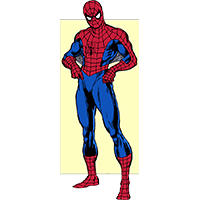
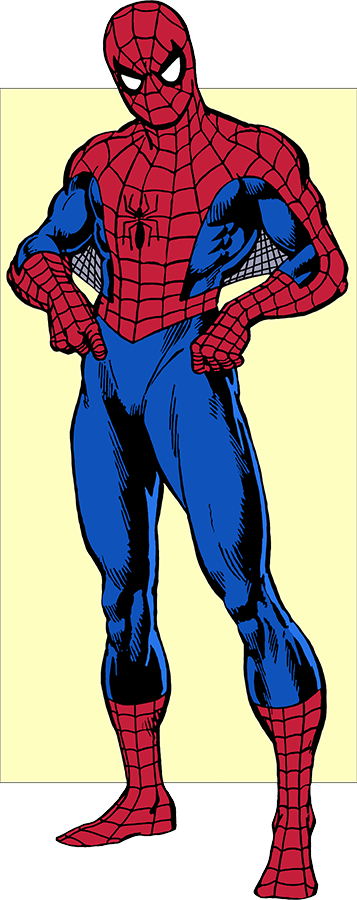
Another key piece of Spider-Man’s equipment is his costume, which is more than simple clothing. The suit is designed to be lightweight, flexible, and durable enough to withstand the extreme stress of acrobatic movement and web-swinging. It contains reinforced materials to resist tearing and protect against friction during high-speed swings through urban environments.
Spider-Man’s mask lenses serve multiple practical functions. They protect his eyes from wind, debris, and bright light during rapid movement while also helping conceal his identity. In many versions of the suit the lenses are specially treated to improve vision clarity and reduce glare. Later versions of Spider-Man’s costume have incorporated additional technological enhancements such as communication systems, tracking devices, and electronic sensors.
Parker has occasionally created specialized spider-tracers, small electronic homing devices he attaches to criminals or vehicles. These tracers emit a unique signal detectable by a matching receiver, allowing Spider-Man to track suspects across the city. The tracers are often disguised as tiny spider-shaped objects that can be placed discreetly during combat.
Throughout his career Spider-Man has also designed various specialized suits for particular missions or environments. These include armored costumes, stealth suits designed to reduce visibility, and insulated suits intended to resist electricity or extreme temperatures. Some versions contain additional technology such as enhanced sensors or protective plating, though Parker generally prefers lighter suits that preserve his agility and speed.
On rare occasions Spider-Man has used more advanced technological systems, including powered armor, enhanced web-shooters with automated targeting, or suits incorporating artificial intelligence. However, these versions are typically temporary solutions created for specific threats rather than permanent upgrades.
Despite these gadgets, Spider-Man’s primary combat advantages remain his natural abilities: superhuman strength, agility, reflexes, and his precognitive “spider-sense,” which warns him of danger moments before it occurs. His inventions are therefore designed not as weapons in the traditional sense but as tools that allow him to control battlefields, restrain opponents, and maneuver rapidly through urban environments.
Taken together, Spider-Man’s equipment reflects the ingenuity of Peter Parker himself. Rather than relying on lethal weapons, he employs adaptable scientific tools that emphasize mobility, capture, and creativity in combat—an approach that has become one of the defining characteristics of the wall-crawling hero.
- First appearance and origin (Amazing Fantasy #15, 1962)
- First appearance of Doctor Octopus (Amazing Spider-Man #3, 1963)
- First appearance of Green Goblin (Amazing Spider-Man #14, 1964)
- Spider-Man unmasks the Green Goblin as Norman Osborn (Amazing Spider-Man #39, 1966)
- “If This Be My Destiny!” Master Planner saga (Amazing Spider-Man #33, 1966)
- Death of Gwen Stacy (Amazing Spider-Man #121, 1973)
- Death of Norman Osborn (Amazing Spider-Man #122, 1973)
- First appearance of the clone of Peter Parker (Amazing Spider-Man #149, 1975)
- Alien symbiote costume obtained (Secret Wars #8, 1984)
- Marriage of Peter Parker and Mary Jane Watson (Amazing Spider-Man Annual #21, 1987)
- Birth and apparent loss of Peter and Mary Jane’s child (Spider-Man #75, 1996)
- Aunt May learns Peter’s identity (Amazing Spider-Man Vol.2 #35, 2001)
- Spider-Man joins the Avengers (New Avengers #1, 2005)
- Public unmasking during the Superhuman Civil War (Civil War #2, 2006)
- Pact with Mephisto alters reality (Amazing Spider-Man #545, 2007)
- Death of Peter Parker and rise of the Superior Spider-Man (Superior Spider-Man #1, 2013)
- Return of Peter Parker as Spider-Man (Amazing Spider-Man Vol.3 #1, 2014)
- Founding of Parker Industries (Amazing Spider-Man Vol.4 #1, 2015)
- Fall of Parker Industries (Amazing Spider-Man #800, 2018)
- Beyond Corporation saga with Ben Reilly as Spider-Man (Amazing Spider-Man #75, 2021)
- Modern era conflicts involving Paul Rabin and the legacy of Benjamin Rabin (Amazing Spider-Man Vol.6 #1, 2022)
Expand full description